
In the beauty industry, packaging is not a container — it is the product experience. A customer may judge a serum in seconds, but the decision to trust it with her money is made long before the bottle is opened. For cosmetic and skincare brands, the custom box is your most important silent salesperson: it communicates quality, tells your brand story, and justifies your price point.
This guide walks through everything you need to know before ordering custom cosmetic packaging — materials, finishes, structures, compliance, and cost — so you can brief your manufacturer with confidence.
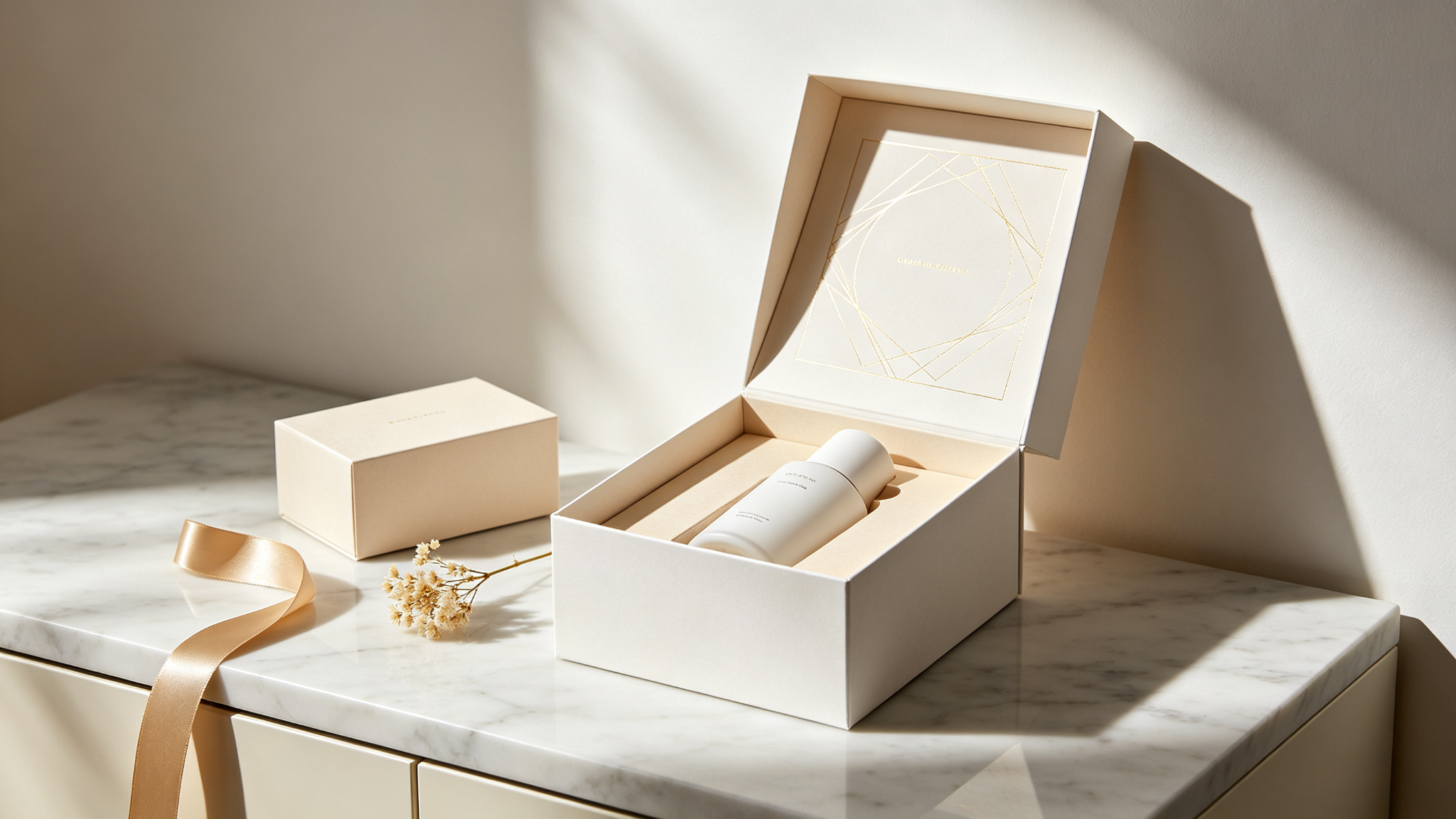
Why Cosmetic Packaging Is Different
Unlike generic shipping boxes, cosmetic packaging sits directly in the consumer’s hands at the point of first impression. It is photographed, unboxed on video, kept on vanity tables, and often reused. This creates three demands that ordinary packaging does not face:
- Perceived value must match product value.A premium serum needs packaging that feels expensive — or the product itself feels cheaper.
- Aesthetic precision matters.Colors must match brand guidelines exactly; a shade off by 2% is a failure.
- Regulatory and functional needs apply.Labels, ingredient disclosure, insert space, and protection for fragile glass bottles all have to be engineered in.
Step 1: Choose the Right Material
The substrate is the foundation of both look and cost. Here are the materials most commonly used for cosmetic packaging — and what each is best at:
Material | Best for | Characteristics |
Art Paper | Outer wraps, sleeves, folding cartons | Smooth, excellent print surface for vivid graphics and photographic detail |
Ivory Board | Folding cartons, standard cosmetic boxes | Stiff, bright-white, premium feel; good for printing and embossing |
White Cardboard | Value-tier boxes, inserts | Clean, bright, cost-effective, recyclable |
Greyboard (chipboard) | Rigid/setup boxes, luxury packaging | Thick and rigid — the classic material for premium hinged-lid boxes |
Kraft Paper | Eco-conscious / organic lines | Natural, rustic, sustainable aesthetic; ideal for “clean beauty” brands |
Dyed Paper | Matching a brand color | Fibre dyed throughout the sheet; edges stay on-brand without printing |
A quick decision rule: if you need a lightweight, printable folding carton, choose ivory board or art paper. If you need a heavy, rigid “luxury” feel, choose greyboard wrapped in art paper. If your brand story is sustainability-first, kraft or FSC-certified ivory board is your strongest choice.
Step 2: Select Finishes That Match Your Positioning
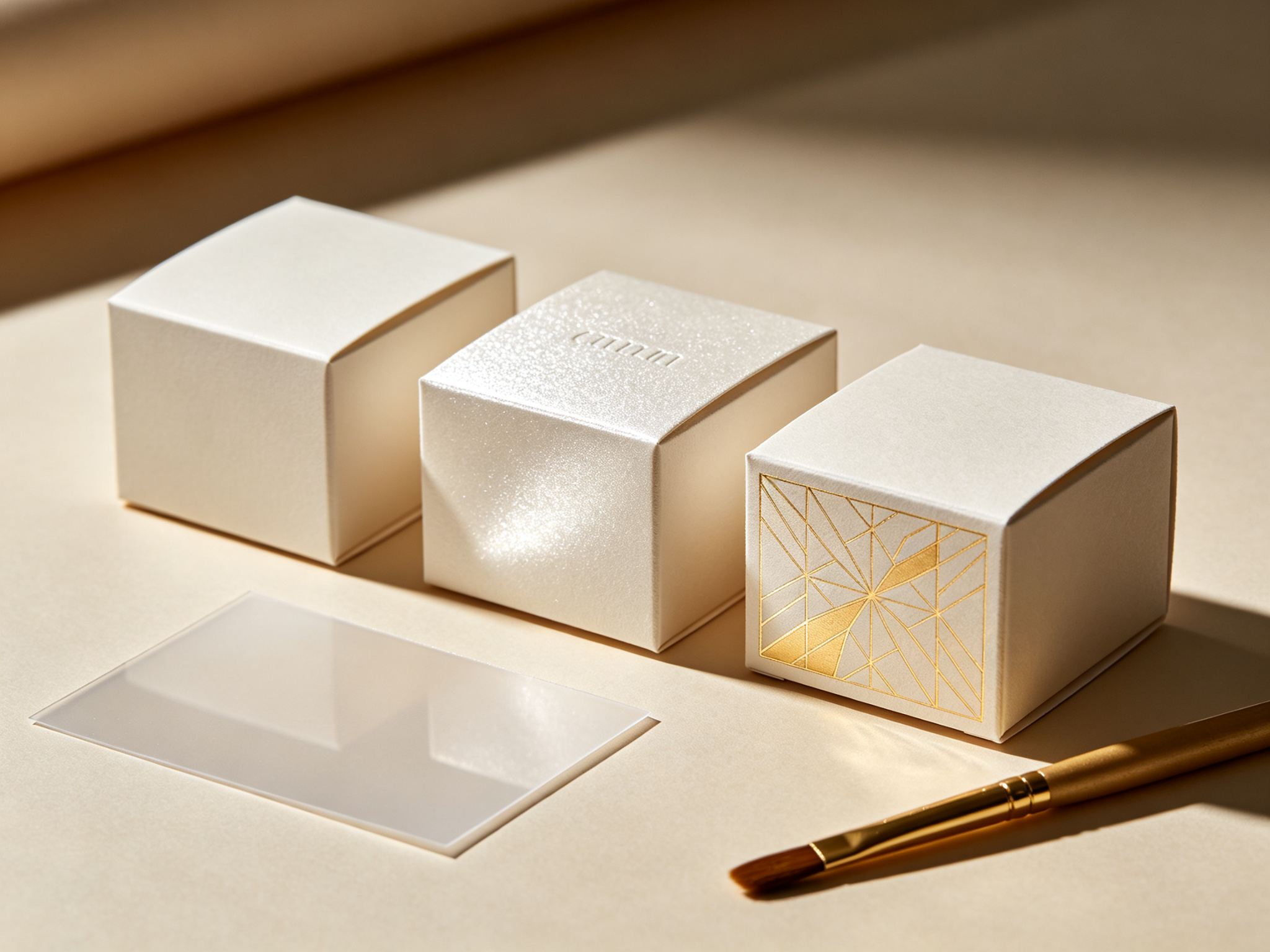
Finishes determine how the box feels and how the light hits it — and they are often the difference between a good box and a great one.
- Matt Lamination:The most popular premium finish. Soft, elegant, low-glare; signals sophistication and is fingerprint-resistant. Ideal for skincare and fragrance.
- Glossy Lamination:Bright, vibrant, high-shine. Best for bold, colorful, youthful or mass-market lines.
- Soft-Touch Coating:A velvety, tactile surface that instantly reads “luxury.” Very popular for high-end cosmetics.
- Hot Stamping / Foil:Metallic gold, silver, rose-gold or holographic foil for logos and accents. The fastest way to add a premium, “expensive” cue.
- Embossing / Debossing:Raised or recessed textures on logos and patterns; adds tactile depth and perceived craftsmanship.
- UV Spot Coating:Glossy highlights on selective areas over a matte background; creates sophisticated contrast.
- Glitter / Sparkle:Decorative shimmer for festive, playful or trend-led collections.
Pro tip from the factory: combine two finishes strategically — for example, matte lamination over the whole box with a spot-UV or foil logo — for a premium contrast that costs far less than you might think.
Step 3: Pick a Structure That Fits the Product
The box structure must protect the product, support its format, and match the unboxing experience you want to create:
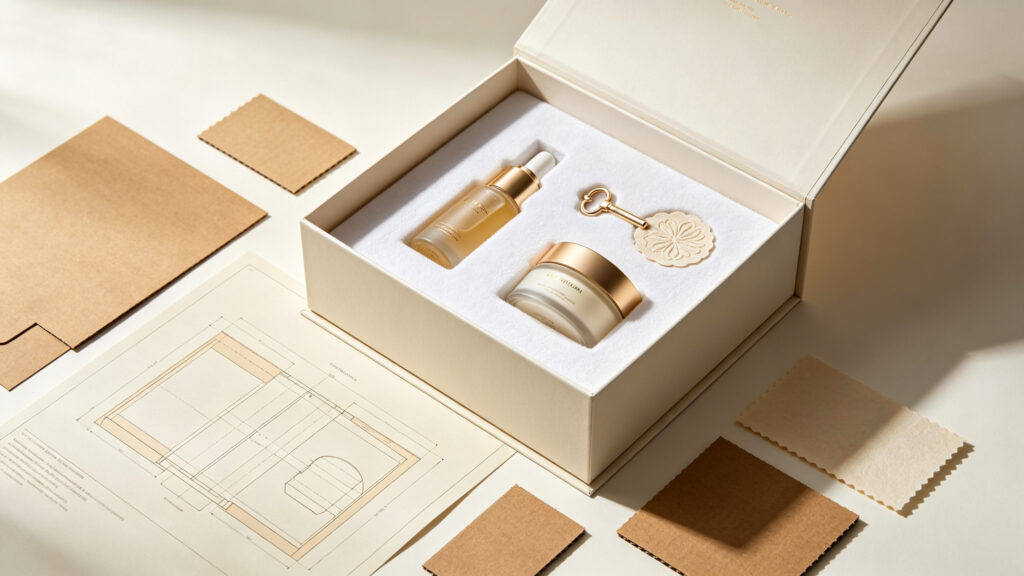
- Rigid (Setup) Box — Lid and Base:The gold standard for premium cosmetics. Thick, sturdy, hinged or two-piece; the “iPhone-style” luxury unboxing.
- Box with Inner Case / Tray:A sleeve plus inner tray structure that elevates presentation and protects multiple components.
- Slipcase / Drawer Box:A sliding sleeve; dramatic and modern, great for gift sets and limited editions.
- Folding Carton:Lightweight and cost-efficient for serums, creams and lipsticks sold in volume.
- Paper Tube / Cylinder Box:Distinctive, premium cylinders for serums, masks, or candles; highly shareable.
Step 4: Don't Forget Function & Compliance
A beautiful box that fails functionally will damage your brand more than an ugly one.
- Inserts and cushioning:Foam, paper pulp moulds, or cardboard inserts keep glass bottles secure and reduce damage in transit.
- Label space:Ensure room for ingredients, batch codes, usage instructions, and regulatory text required in your target markets.
- Compliance awareness:Cosmetic packaging is subject to regulations on labelling, and increasingly on recyclability (such as the EU PPWR). Recyclable, mono-material structures with certified fibre are the safest long-term choice.
Step 5: Understand What Drives Cost
Budgeting correctly comes down to knowing which variables move the price:
- Material grade and thickness— greyboard/rigid construction costs more than folding cartons.
- Finishes— lamination and foil stamping add per-unit cost; soft-touch and embossing are mid-tier additions.
- Structure complexity— drawer boxes and multi-part structures require more production steps.
- Quantity (MOQ and volume)— larger runs lower the per-unit price significantly.
- Printing complexity— number of colors and special inks affect setup and cost.
At Impetus Packaging, we offer tailored cosmetic packaging starting at just 500 pieces, so emerging brands and startups can test designs without committing to massive volumes — then scale production with our in-house factory and 8+ precision production lines as you grow.
Working With Your Manufacturer: A Smooth Process
A professional partner makes the process simple:
- Share your requirements— product dimensions, quantities, target price, brand references, and any compliance needs.
- Receive structural and material recommendations— we help you balance look, protection and budget.
- Approve a free sample— stock samples or custom samples let you evaluate quality before committing.
- Confirm artwork and production— we produce a pre-production proof, then run bulk production with QC checks.
- Ship and scale— fast delivery for large quantities, with consistent quality across reorders.
Conclusion: Packaging Is Your Brand's Most Reusable Asset
In a crowded beauty market, the custom box is one of the few places where you control the entire first impression. Choose materials and finishes that reflect your positioning, design for compliance and recyclability, and partner with a manufacturer who can deliver sample-backed quality at a quantity that fits your stage of growth.
Ready to bring your cosmetic packaging to life? Contact Impetus Packaging for free samples and a tailored quote — we’ll help you create packaging that makes your brand impossible to ignore.